
Introduction
As the world faces the pressing challenges of climate change, the need for businesses, industries, and governments to reduce their carbon emissions has never been more critical. Decarbonization, or the process of reducing carbon dioxide (CO2) emissions, has become a key pillar of sustainability strategies for organizations across sectors. Companies are expected to not only reduce their own emissions but also align with global climate goals such as those set by the Paris Agreement, which aims to limit global warming to well below 2°C and pursue efforts to limit it to 1.5°C.
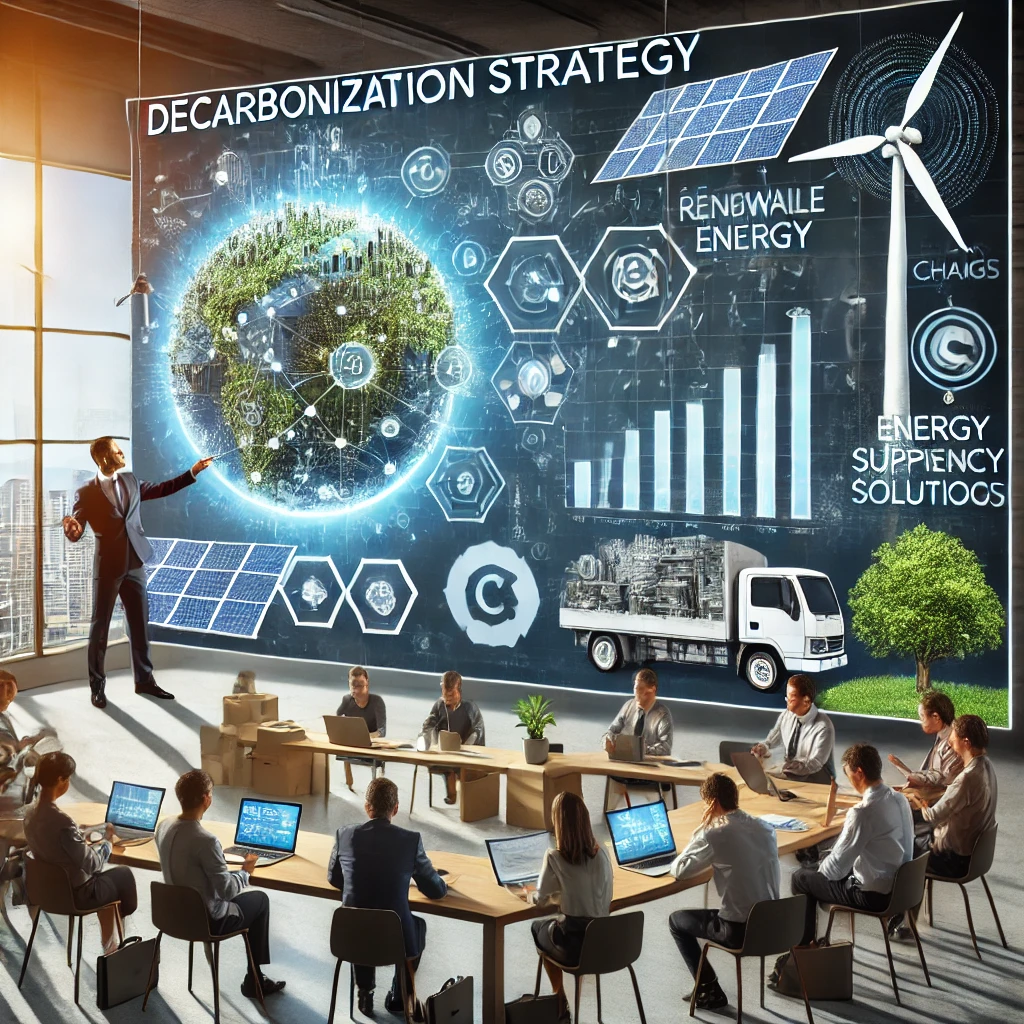
At CarbonTrix, we specialize in offering comprehensive Decarbonization Strategy Consulting and Training Services. Our services are designed to help organizations develop effective decarbonization strategies that reduce carbon emissions while maintaining economic viability. Whether you’re looking to meet regulatory requirements, improve operational efficiency, or achieve corporate sustainability goals, CarbonTrix provides the expert guidance and tools needed to decarbonize your operations effectively.
Through our consulting services, we help businesses identify key emission sources, develop carbon reduction strategies, and implement innovative technologies and practices. Additionally, we offer training programs to empower internal teams with the skills and knowledge to execute decarbonization strategies, ensuring long-term success in reducing carbon footprints.
Background
Decarbonization is the process of reducing or eliminating carbon emissions from human activities, particularly those associated with the burning of fossil fuels for energy production, industrial processes, and transportation. As global efforts to mitigate climate change intensify, decarbonization has become a strategic priority for companies seeking to reduce their environmental impact and align with climate targets.
There are several key drivers behind the growing demand for decarbonization strategies:
- Regulatory Compliance: Governments worldwide are implementing stringent regulations and policies to curb carbon emissions, such as carbon pricing mechanisms, emissions trading systems (ETS), and net-zero commitments. Organizations need to develop decarbonization strategies to comply with these regulations and avoid financial penalties or reputational damage.
- Investor and Stakeholder Pressure: Investors, customers, and stakeholders are increasingly prioritizing environmental, social, and governance (ESG) performance. Transparent decarbonization efforts signal to investors that a company is managing climate risks and seizing opportunities related to the transition to a low-carbon economy.
- Corporate Social Responsibility (CSR): Decarbonization is a key aspect of CSR, enabling companies to demonstrate their commitment to environmental sustainability. By reducing their carbon footprint, organizations can enhance their reputation, build trust with customers, and contribute to global climate action.
- Cost Savings and Operational Efficiency: Decarbonization strategies often lead to cost savings through increased energy efficiency, reduced waste, and lower operational costs. Organizations that adopt clean energy technologies and resource-efficient practices can reduce their energy bills and improve profitability.
- Climate Action and Sustainability Goals: Decarbonization is essential for organizations that have set ambitious sustainability or net-zero goals. By cutting carbon emissions, companies can align with global efforts to limit climate change and contribute to a sustainable future.
Despite these benefits, developing and implementing a decarbonization strategy can be complex, requiring a deep understanding of emissions sources, technologies, and best practices. CarbonTrix’s consulting and training services are designed to help organizations navigate these challenges and create effective, tailored decarbonization strategies.
Objectives
The primary objectives of CarbonTrix’s Decarbonization Strategy Consulting and Training Services are:
- Develop Effective Decarbonization Strategies: We aim to help organizations identify their carbon emission sources, assess their current carbon footprint, and create tailored decarbonization strategies that are aligned with global climate targets and corporate sustainability goals.
- Support Compliance with International Standards and Regulations: Our services ensure that your decarbonization strategies comply with relevant environmental regulations, emissions reduction policies, and standards such as the Science Based Targets initiative (SBTi), ISO 14064, and regional climate policies.
- Facilitate the Transition to Clean Energy: CarbonTrix assists organizations in transitioning to renewable energy sources, such as solar, wind, and hydropower, as well as improving energy efficiency in operations to reduce reliance on fossil fuels.
- Drive Innovation and Operational Efficiency: We help companies adopt new technologies and practices that reduce emissions while enhancing operational efficiency. This includes energy optimization, process improvements, and sustainable supply chain management.
- Build Internal Capacity through Training: In addition to consulting, we offer comprehensive training programs that empower your team to execute and manage decarbonization strategies effectively. Our training ensures that your organization can sustain its decarbonization efforts over the long term.
Target Audience
Our Decarbonization Strategy Consulting and Training Services are designed to serve a broad range of industries and organizations, including:
- Corporations and Industrial Companies: Large industrial companies and manufacturing firms are among the biggest contributors to global carbon emissions. CarbonTrix helps these organizations assess their carbon footprint and develop decarbonization strategies that reduce emissions across production processes, supply chains, and energy consumption.
- Energy and Utilities: The energy sector is undergoing a major transition toward renewable energy and decarbonization. CarbonTrix assists energy companies and utilities in reducing carbon emissions through energy efficiency, renewable energy integration, and grid decarbonization strategies.
- Transport and Logistics: The transportation sector is responsible for a significant portion of global emissions. We help transport and logistics companies reduce their carbon footprint through strategies such as fleet electrification, fuel efficiency improvements, and sustainable logistics management.
- Government and Public Sector Organizations: Public sector entities play a critical role in advancing decarbonization efforts at the national and regional levels. CarbonTrix works with governments and municipalities to develop and implement decarbonization strategies that align with public policy goals and climate action plans.
- Sustainability Teams and Environmental Managers: Our training programs are particularly beneficial for sustainability professionals and environmental managers responsible for developing and executing decarbonization strategies within their organizations. We provide the tools and knowledge needed to lead successful carbon reduction initiatives.
Consulting Services
CarbonTrix’s consulting services are designed to provide end-to-end support throughout the decarbonization process. From assessing your organization’s current emissions to implementing cutting-edge solutions, we help you navigate the complex landscape of decarbonization.
1. Carbon Footprint Assessment
Our consultants begin by conducting a thorough assessment of your organization’s carbon footprint, identifying key emission sources across Scope 1 (direct emissions), Scope 2 (indirect emissions from purchased energy), and Scope 3 (other indirect emissions). This assessment serves as the foundation for developing a tailored decarbonization strategy.
2. Strategy Development
Based on the results of the carbon footprint assessment, we work with your team to develop a comprehensive decarbonization strategy that includes both short-term and long-term actions. This strategy outlines key areas for emissions reduction, including energy efficiency, renewable energy adoption, process improvements, and supply chain optimization.
3. Renewable Energy Transition
CarbonTrix helps organizations transition to renewable energy sources such as solar, wind, and hydropower. Our consultants guide you through the process of integrating renewable energy into your operations, whether through on-site generation, power purchase agreements (PPAs), or participation in green energy programs.
4. Energy Efficiency and Process Optimization
Improving energy efficiency is one of the most cost-effective ways to reduce emissions. We help organizations identify energy-saving opportunities across their operations, from optimizing industrial processes to upgrading equipment and systems for greater efficiency.
5. Sustainable Supply Chain Management
Decarbonizing the supply chain is critical for achieving significant emissions reductions. CarbonTrix works with organizations to assess the environmental impact of their supply chains and develop strategies for engaging suppliers, optimizing logistics, and reducing carbon-intensive activities.
6. Carbon Offset Solutions
For organizations that cannot fully eliminate their emissions, carbon offsets can be an important tool for achieving carbon neutrality. We help organizations identify credible carbon offset projects that align with their sustainability goals and provide guidance on integrating offsets into their decarbonization strategies.
7. Monitoring and Reporting
Effective decarbonization strategies require ongoing monitoring and reporting to track progress and ensure accountability. CarbonTrix assists organizations in setting up systems for tracking emissions reductions and reporting progress to stakeholders, regulators, and voluntary disclosure platforms such as the Carbon Disclosure Project (CDP).
Training Services
In addition to our consulting services, CarbonTrix offers Decarbonization Strategy Training to empower your team with the knowledge and skills needed to implement and manage decarbonization initiatives. Our training programs are customizable and can be tailored to the specific needs of your organization.
1. Introduction to Decarbonization
Our training begins with an introduction to the concept of decarbonization, explaining its importance in the context of climate change, sustainability, and corporate social responsibility. We cover key topics such as carbon emissions, carbon footprints, and the various strategies available for reducing emissions.
2. Carbon Footprint Measurement and Data Collection
Participants are guided through the process of measuring carbon emissions and collecting the data needed to assess their organization’s carbon footprint. We provide practical examples and case studies to demonstrate how to gather accurate data on energy use, transportation, and supply chain activities.
3. Decarbonization Strategy Development
Our training includes a comprehensive overview of how to develop a decarbonization strategy, from setting carbon reduction targets to identifying emissions reduction opportunities. Participants learn how to align their decarbonization strategies with international standards and frameworks, such as the Science Based Targets initiative (SBTi).
4. Renewable Energy and Energy Efficiency Solutions
Participants are introduced to various renewable energy and energy efficiency solutions that can be implemented as part of their decarbonization strategy. We provide guidance on how to evaluate different technologies, assess their feasibility, and implement them effectively.
5. Supply Chain Decarbonization
Decarbonizing the supply chain is a critical component of any decarbonization strategy. Our training covers best practices for reducing emissions across the supply chain, from sourcing sustainable materials to optimizing transportation and logistics.
6. Practical Exercises and Case Studies
To reinforce learning, our training includes hands-on exercises and real-world case studies. Participants practice developing decarbonization strategies, identifying emissions reduction opportunities, and setting achievable carbon reduction goals. This practical approach ensures that your team is well-prepared to implement decarbonization initiatives.
7. Certification and Ongoing Support
Upon completion of the training, participants receive a certificate of completion, demonstrating their expertise in decarbonization strategy development and implementation. CarbonTrix also provides ongoing support to ensure that your team continues to apply best practices and achieve meaningful progress in reducing carbon emissions.
CarbonTrix’s Decarbonization Strategy Consulting and Training Services are designed to help organizations navigate the complex and evolving landscape of carbon reduction and sustainability. By partnering with us, you can develop effective decarbonization strategies that not only reduce your carbon footprint but also enhance your operational efficiency, align with global climate goals, and build a more sustainable future.
Whether you are a large industrial company, a public sector organization, or a sustainability professional, our tailored services can help you meet your decarbonization targets and contribute to a low-carbon economy. Let CarbonTrix guide you through the decarbonization process, providing the tools, knowledge, and expertise needed to achieve long-term success in the fight against climate change.